

Search This Blog

Showing posts with label interactive marketing. Show all posts

Monday, June 7, 2021

5 Ways QR Codes Help Homebuilders Level-up New Home Sales

 CPS QR Code Brochure for Homebuilders

Builders and Property Managers Embrace Technology


Homebuilders, who have done remarkably well despite external forces like a world pandemic and material costs (kudos!), are relying more and more on technology to level-up their new home sales efforts. As pandemic restrictions ease, a noticeable addition has emerged in the form of a black and white matrix barcode: the QR Code.

When scanned with a digital device such as a phone or tablet, these codes come to life, leading viewers to landing pages populated by video tours, photo galleries, location information and pricing details.

According to Statista, an estimated 11 million American households would scan a QR code in 2020, which was a marked increase from a previously estimated 9.76 million scans in 2018. The adoption of QR codes by businesses is now being met with equal acceptance from consumers. Digital device makers such as Apple and Samsung are including native QR code readers in their operating systems—confirming that QR codes are poised to explode.

The seemingly innocuous black and white squares are intelligently designed to not only store digital details for quick scan and link access, they deliver a number of additional benefits to homebuilders and their home shoppers.  

1. Easy Integration and Use

The generally held belief is that the addition of new technology is a benefit to business. However, if it isn’t user-friendly or intuitive for staff and customers to use, it won’t quickly be adopted. Luckily, QR codes require no training – just scan and go! And, it’s easy and inexpensive for builders to integrate the codes on their digital signage, websites and other marketing collateral.

2. Provide Immediacy and Convenience
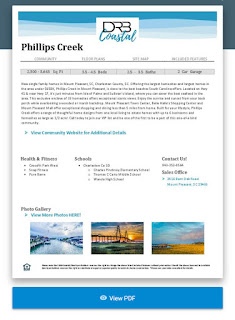
CPS QR Code Interactive Brochure
Do you know that “QR” stands for “Quick Response”? Many people today complete the bulk of their research online and these “Quick Response” codes put the details they seek immediately at their fingertips! Interactive QR codes can be designed to easily link to specific websites, maps, amenities, floor plans and even showcase the greater community and proximity to desired locations such as parks, schools and hospitals.

3. Eco-friendly and Easily Modified

QR codes can be digitally modified and updated an infinite number of times without requiring a change to QR code graphics. This leads to reduced waste and need to re-print materials (sales brochures, business cards, signage) on which codes are included. Home shoppers get details right on their smart device that they can easily view or share at any time without having to find a piece of paper! Builders can also design QR codes with unique and creative colors and designs to align with their overall brand and to maintain seamless appearance, helping to bridge the gap between print and digital strategies.

4. Track and Capture Valuable Analytics

QR codes not only deliver information, they track valuable data. They can be coded to track location, obtain contact information, show repeat engagements and record real-time reactions, all of which can be compiled into reports that include where, when and with what device a code was scanned. QR codes can also be designed to capture contact information, resulting in a bank of leads for prospect follow-up and future engagement. To drive sales office traffic, QR codes can direct home shoppers to an online form to arrange site visits. Voila! Instant appointment.

5. Enhance Interactive Experiences

Dynamic QR codes offer suggestions, options, previews and help guide prospective buyers along their home shopping journey.
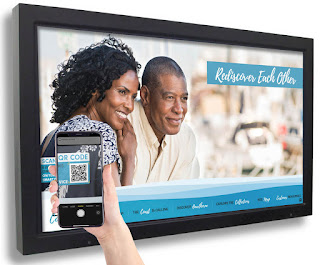
CPS QR Code Brochure on SalesTouch
The cornerstone of CPS’ suite of interactive solutions is SalesTouch, a powerful and dynamic sales and marketing presentation used both online and in sales and leasing offices across the country. To further enhance an already compelling experience, CPS has added the new QR Code Brochure which integrates directly onto the SalesTouch interactive kiosks. Home shoppers scan the unique QR code to get ‘whisked away’ to an interactive brochure—no touching required!

The brochures give visitors information at their fingertips including floor plan views & interactive options, as well as a community details page, a community site map with homesite availability and an included features list. They could also include links to other communities or properties to help with cross-selling efforts! To see how CPS’ QR Code Brochure has been integrated in a real-world scenario, click this link which will transport you to a Dan Ryan Builders’ DRB Coastal community.

For over 35 years, Computer Presentation Systems (CPS) has helped shape how homebuilders and property managers avail modern technology to simplify and improve everyday tasks and elevate overall experiences. QR codes are one of the latest contactless technology integrations adding another level of convenience to user experiences—while keeping germs at bay.

Home shopping continues to scale in intensity as the summer months near and as we emerge from our shared pandemic slumber. Prospective buyers are on the hunt for new places to set roots and any edge homebuilders can provide ultimately eases burdens associated with home shopping. QR codes offer visually engaging and information-filled experiences that leverage new technology enhancements that have become native to the most used digital devices!

How are you engaging home shoppers with technology? If you’re a homebuilder or property manager interested in leveling-up your new home sales or leasing efforts, contact CPS to learn how our suite of interactive solutions can help!

#newhomesales #interactive #engagement #technology

Tuesday, March 11, 2014

Bringing Green Out from "Behind the Walls"

Incorporating green into building has been gaining momentum -- particularly, according to a recent Constructech article -- among residential homebuilders.  Builders, says Constructech, can market green from a cost savings perspective -- thus, a gaining a competitive value add in the marketing equation.
What drives consumer interest in green?

A recent Navigant Research study (discussed in a Constructech article here) suggests home energy-management systems have had a difficult time gaining traction in the market. But...Navigant suggests increased awareness will drive future growth.

How can you provide the critical increased awareness so your home shoppers will want to buy-in to your energy-saving options?  Take a look at what Navigant says are the primary drivers: the desire to reduce electricity bills as well as utilize smart thermostats.

Consumers have signaled their interest -- how are you responding?  One great way to

Monday, January 20, 2014

Where are you? Employee-Focused Sales vs. Leave Me Alone, I'm Shopping

Thought provoking article in a Wall Street Journal article regarding retail marketing; you can view it here.

The author, Elizabeth Holmes, describes a new shopping paradigm for Clinique, as an example of the changes underway in retail.  Most women can relate to "old school" cosmetic shopping: almost everything was behind glass and available only with a salesperson's assistance.  Prices were invisible.  Product demos were generally limited to those provided by a Clinique consultant.
Open Selling: your buyers are actively engaged with your product!

Now, Clinique is moving to an "open sell" environment.  Items are out front and available for testing.  One-on-one selling is going away -- and it's not because Clinique is trying to economize.  They're also adding "experiential" components such as iPads and other self-service capabilities.

"Open selling" recognizes shoppers want to shop in different ways.  And, Clinique reports the new strategy has increased sales in many locations -- some in the double-digits. 

How does your sales/leasing office respond to the desire to "shop in different ways"?  In previous blogs, we've talked about "narrowcasting" -- the opposite of traditional news and information broadcasting as the seller allows prospects to determine what they want to view in order to influence the purchase decision.

Interactive touchscreens hit both of these points -- shoppers can "pull" information of interest and shop at their own speed.  Want to find out about local schools?  The information is there!  Interested in the local arts scene?  That's available, too!  Over 55 and want to shop in a quiet location at your own speed?  Try our bar height touchpads!

Friday, September 21, 2012

Your sales office provides a distinct home-field advantage!

Earlier this week, our CPS Solutions blog talked about marketing studies indicating that regardless of product -- that is, whether it is consumer electronics, cars or new homes, for example -- women are emerging as the primary role in decision-making.

We'd like to highlight another set of marketing data suggesting that even the most "dialed-in" retail locations (and..we're all retailers at heart..wouldn't you agree?) have room to improve their actual physical location as a place of engagement.  We're going to provide several ideas to consider-- and they're completely different from yesterday's Relater Suggestions #1 and #2!

In-house Idea #1: Be Bold and Strategic with Signage:

It bears repeating over and over...the mere fact a consumer walks through your doors indicates a level of interest in your product.  The good news is you have a physical location for prospects to visit and it is up to you to maximize its marketing value!

We spend a lot of time in this blog talking about interactive touchscreens and they're certainly a way to go Bold and Strategic!  Interactive touchscreens engage prospects from the minute they walk in your door -- and they're great conversation starters.
Small sales trailer goes Bold & Strategic with Signage!

They're other ways to go Bold, however, and several are probably well within your control.

No doubt, you'd like to engage your prospects and get them involved with your brand.  How visible are your calls to action?  Do you make connecting (via Facebook or other digital channels) clear and straightforward?

How about your prospect registration cards?  Do you "just" ask for information or do you include a QR code or piece of information found only on the card? Try kicking-up this process!  Think about the reg card as a means of two-way communication.

What about business cards?  Some might find them "old school" but..why not have them located so it is easy to pick one up?  Many times, business cards are put away in a desk or placed in some obscure location.

Selling new homes? Try putting a different piece of information along with your card in each model!  Mary Smith might not be interested in the rec center highlighted in Plan 2 but..very interested in the school information located in Plan 4.  Who knows what the next visitor will find interesting but..you're making an effort to reach out, offer something of unique interest and your contact info is attached to all of it! 

Did you know people find thowing out a business card with a photo very difficult?

Remember: your location provides you with a distinct home-field advantage.  Put it to good use!


Monday, August 20, 2012

Student Housing Leasing Offices: Great Venue for Interactive

Over the last decade, student housing has undergone a significant transformation.  Back in the day, universities (both public and private) housed almost all students on campus -- in dormitories and houses.  Married and graduate student housing demand emerged in the 50's and 60's; university-built apartment complexes met this need.  In the early/mid 70's, universities started adding apartment complexes designed for undergraduate students to meet demand for "non-traditional" housing.

Student Housing: Interactive Kiosks Meet Leasing Office Demands
Now, we've seen the transition towards private companies providing housing for all student groups.  Many institutions built and/or remodeled their traditional offerings around the Baby Boomer growth period.  Now, their complexes are aging and "in competition" with housing choices offered off-campus.  While "power houses" such as Harvard and Stanford might not find this an issue, Bill Bayless, CEO at REIT American Campus Communities, notes in Builder"Colleges and universities, in order to recruit and retain students, need market-based solutions acceptable to today's customers."

Market-based solutions allow colleges/universities to allocate their ever-tighter budget dollars to their core mission: education.  As student "consumers" look for housing options, many schools find themselves unable and/or unwilling to compete.  Yet, housing is critical to the institutions's marketability.  Tom Trubiana, Chief Investment Officer at REIT EdR says, "Schools are looking for solutions to fulfill their commitment to students.  They're looking to the private sector, which can go out to the capital markets and raise funds."

As a result of this change, "student housing" is seeing the addition of features and amenities typically associated with "market" housing.  Mike Harnett, Pulte's chief investment officer, suggests "resort-style student housing" is becoming the norm -- and this is similar to housing provided by Pulte in its Del Webb communities. “It’s about high-touch, hospitality, and lifestyle,” he says.

The leasing process is somewhat unique in this market niche.  Students might reserve popular locations a year (or more) in advance.  At the same time, there's a tremendous "rush" at certain times in the year.  Just as complexes are changing, the leasing office must adapt, as well.  We're seeing the addition of interactive touchscreen kiosks and tablets to provide a quick overview of what's available to lease (and when), property highlights and surrounding local "hot spots" including dining, shopping and hotels for parents to use when visiting!

Friday, March 2, 2012

Homebuilders: Your Interactive Touchscreen and Women-Centric Design

We suggested in an earlier blog that a successful interactive touchscreen helps get your home shoppers more engaged in finding out about your product and they're more informed as they begin a model tour.

How can you design an effective system? No doubt you've heard us say SalesTouch is more than "just a pretty face."  Effective design is oriented towards your buyer demographic
SalesTouch Engages and Informs Home Shoppers!
We like to suggest a touchscreen system engages the home shopper from the minute they walk in your door -- providing information about your product and helping them understand how living in your community meets one or more of their needs.

Have you investigated some of the latest thinking re: woman-centric homebuilding?  A recent BuilderOnline article (available here) suggests it's not just a matter of making your website "pink" or building better laundry rooms -- it's a complete rethinking of marketing, sales and design.

A well-designed interactive touchscreen can help with this: highlighting items that fit into the "10 Commandments of Women-Centric Design" (available here on a successful Maine-based builder's website).  Focus on lifestyle (how close schools and shopping are to your community), highlight specialty items (lazy Susans and open-wire shelving in your kitchens) -- in other words, use the touchscreen to describe how your product is more livable in their terms.

It's all about engaging your home shopper and informing them how your product can help meet their needs!

Friday, January 13, 2012

Is Your Message as Compelling as Your Business Needs?

Great article by Robert Clay, Marketing Wizdom Tips No. 1 and 2. He suggests every successful business requires a strong, sustainable foundation. 
How unique is this? Your customer is defining their need!
A solid foundation needs to be able, Clay suggests, to express its business purpose in a fashion that is understood and shared by everyone in the business.  Otherwise, prospects and customers can't fully understand, appreciate or get excited about your product.

Clay goes on to suggest that the more compellingly the message is weaved...the greater the competive advantage and the better you'll be in the marketplace.

So...how do you weave the message? Step 1: Determine your customer's needs; and Step 2: Develop your unique selling proposition.

A well-designed interactive touchscreen goes a long way to helping with both Step 1 and Step 2! 

While it is possible to say: customers enjoy interacting with a touchscreen...what's really going on is the customer is defining their needs relative to what is being touched (which is your product).  They're  forming opinions: "This location is really great: the elementary school is only 2 blocks away" as well as making decisions: "I like Plan 2 better than Plan 1 because it has a separate laundry room." 

Boom: your agents have their prospect's needs being defined.  And, during this process, the prospect has been touching your unique selling proposition: whether it be location, features, floorplan or warranty.  And, they realize you are making an effort to make this process more helpful, a bit different and definitely unique!

Friday, November 4, 2011

Good News in the Multifamily Market

There's good news to be found in the housing sector..in the multifamily market.  Mark Herschmeyer, atCoStar Group, tells us that "the apartment market has become one of the real estate industry's -- and the broader economy's -- best hopes for a return to the good old days." 
The numbers bear up this optimistic commentary: in the last 12 months, there's been a net increase of 1.4 million households in rental housing.  And, new construction starts are at their highest since the end of 2008 with the pace of development activity increasing in most markets.

Another interesting statistic is that a "substantial piece of the overall apartment demand story," according to Michael Cohen at CoStar is, the middle-aged demographic (basically, ages 35-64 years).

Cohen asks, "I wonder whether developers truly understand the contours of their renter base."  Do you?  How does this changing demographic impact your marketing efforts?  As Cohen, suggests, it's the middle-aged household that is interested in stainless-steel appliances and granite countertops.  There's a broad segment of the multifamily market with an interest in location, amenities and features; how have you adjusted your product and marketing for this demographic? 

Doesn't an interactive touchscreen provide an effective way to reach this market?  Let your "new" prospects browse through floorplans, explore the neighborhood and search based upon their criteria.

Friday, October 28, 2011

What's Hot in Digital Signage? Data-driven Content

Real-time, data-driven content answers consumer questions
It's interesting to see, in screenmediamag.com, that "data-driven content" is right up there in a recent "What's Hot?" article.  It's alongside NFC (near field communication) -- a much newer digital signage component providing for simplified transactions between two devices located in close proximity.

CPS has been providing data-driven content in our interactive touchscreen product, SalesTouch, since it was introduced.  We thought it made sense to display real-time information in every presentation.  Who wants to see old, outdated information? Or have to ask even the most basic questions?

Looking for a new home?  SalesTouch displays current inventory and pricing.  Interested in apartment living?  SalesTouch displays available units meeting your desired criteria (one bedroom, view of the river and on a higher floor).  Visiting the Navy Yard?  CPS' interactive map allows you to search through personnel, find their location and notify them of your arrival.

That's what data-driven content brings to digital signage!  Consumers find real answers to their questions.  An equally powerful component is seamless integration whereby data in one system (e.g., current inventory and unit pricing found in a third-party accounting application) displays in another (the SalesTouch interactive sitemap). Great to find out that this is considered HOT!

And, we can help with NFC, too!

Thursday, October 27, 2011

What type of imagery is more impactful: Product or Lifestyle?

CPS develops interactive touchscreen presentations for clients to use in customer-facing environments.  Our SalesTouch product (used in sales and leasing offices) frequently displays neighborhood amenities -- schools, shopping, dining, recreation, etc. 

We're often asked, "What do you think? Should we use pictures of the outside of the location or a map or something different?"
Wouldn't you like to find out more about living in this neighborhood?
The same question can be asked more generically, "What types of images motivate consumers: product or lifestyle?" since motivating a consumer decision is the ultimate objective of the image.

Opinions vary all over the map. 

Those advocating for "product" say that type of image creates a communications path and link with the product. 

Others suggest "lifestyle" saying those images can instantly illustrate an unrealized need in an uncomplicated fashion. 

In a somewhat informal poll, using marketing blogs, lifestyle appears to be the most prevalent.  Karl Adrian said it well, "Rule of thumb: first, sell the heart, then the mind, then the wallet with product benefits and pricing." 

What do you think?

Monday, October 24, 2011

Marketing and Packaging "Green"

Jobie Summer, with MarketYourSustainableBusiness.com, presented her unique approach to "green" marketing based upon how consumers value and purchase "green" in a recent BuilderRadio discussion.
Whole Foods Market Customer Comment Board - multiple shades of green!
It's an eye-opener for businesses selling anything from consumer products to cards to new homes and everything in between.  Summer's approach suggests every seller re-examine their green "value-proposition" in terms of where their potential buyers sit on the "green" scale.  One "green" buyer, for example, will appreciate your LEED certification; another is far more interested in purchasing items impacting their lifestyle.  In other words, buyers motivated by "green" aren't motivated in the same manner and won't make similar purchase decisions.

Jobie suggests buyers fall into 1 of 4 "shades" of green:

(1) LOHAS (Lifestyles of Health and Sustainability) - these buyers make decisions based on values, are the least price-sensitive and drive trends, encouraging others to try "green";
(2) Naturalities - buyers motivated by personal health and wellness objectives; they will pay for certain types of "green" products directly impacting their lifestyle ;
(3) Drifters - trends are important to these buyers yet they're not driven by community values; more price-sensitive; green needs to have personal connection;
(4) Conventionals - these buyers focus on the practical; want to see a community perspective as they focus on recycling, energy savings and the like.

What's "green" have to do with interactive touchscreens?  Using a touchscreen allows you to enhance your green footprint -- and respond to multiple "shades" of green.  Highlight your "conventional" green credentials by eliminating pre-printed brochures with the print on-demand functionality; direct attention to specific green components (e.g., carpet, paint, etc); highlight your green credentials through commentary, signage and video such as "behind the walls".

Friday, October 14, 2011

8 Marketing Changes...they're only 8?

It's been said that today's marketing world is experiencing a "revolution like never in its history" according to Loren McDonald.  He suggests there are 8 major marketing events or changes that we can't ignore. 

At the top of the list:

#1 - Customer Service is the new marketing; and
#2 - Customers become your marketing department.

They're related aren't they?  Customers -- in your store, on your website, in your sales office -- gather impressions and make decisions more quickly than ever.  Then, they're likely to Tweet, Facebook and otherwise distribute those impressions to their friends (in other words, their world!).  They're interacting with and influencing people you've never even had a chance to influence -- as well as those you've actively marketed and advertised to with carefully planned campaigns!

As a result, the the customer experience is critical.  Customer Service is no longer answering questions or processing returns in an efficient and friendly fashion; it's the entire experience that's under the microscope.   Making it memorable, unique and positive is key to growing your business and acquiring new customers.  Your customer "marketers" are influencing your market...and it's important (and exciting) to enable and encourage them to do some of your marketing for you.

Social media can't be pigeonholed -- it's not just communications or entertainment or advertising or marketing.  It is up to you to harness social media as your marketing partner as best possible -- and as uniquely as you're able.